How to Care for Luxury Leather Boots and Jackets (So They Last a Decade)
*Disclosure: This post may contain affiliate links. If you make a purchase, we may earn a small commission at no extra cost to you. Thanks for supporting TwoStep and Tequila!
How to care for leather boots so they last a decade comes down to four steps the bootmakers actually teach: clean, condition (by leather type), polish when it fits the hide, then protect. In Texas, dry heat pulls moisture out of leather between wears, and the occasional rainstorm tempts people to stick wet boots by a heater. Skip the heat, keep conditioning on schedule for the leather you own, and the Lucchese or Tecovas pair you already spent on — or the leather trench from our Bottega guide — will outlast the trends around them.
This is part of Runway to Ranch, our series on wearing one luxury idea with real Texas boots. After comparing Lucchese vs. Tecovas and walking through Gucci Fall 2026 for Texas, this guide is the utility chapter: how to keep the leather you bought.
The Texas problem: dry heat, then rain
North Texas winters are short, but the dry stretch from late summer into winter is long. Leather that sits unconditioned in air conditioning and low humidity loses oils and starts to look chalky or crack at the flex points — shaft creases, vamp wrinkles, jacket elbows. Lucchese’s own buffalo and calf care guide puts it plainly: keep boots in a cool, dry place away from direct sun and moisture, and if they get wet, air dry them — never with space heaters or hairdryers.
Then a cold front dumps rain on a Fort Worth parking lot. The fix is the same across both brands: blot excess water, let the boots dry at room temperature, use cedar boot trees to hold shape and pull moisture, and only condition once the leather is fully dry. Heat “speeds up” drying by cooking the hide. It shortens the life of the boot.
Lucchese’s four steps: clean, condition, polish, protect
Lucchese’s Boot 101 maintenance page is the clearest brand-side checklist we found. For smooth leather they recommend:
- Clean — brush off dirt or dust with a damp cloth or soft brush.
- Condition — apply a leather conditioner in thin coats.
- Polish — a neutral or matching cream-based polish, buffed with a soft cloth.
- Protect — the clean-condition-polish routine itself builds protection; follow with a non-silicone protector where the leather calls for it.
Suede and stone-washed leather get a different path: treat new boots with a non-silicone water and stain protector before the first wear, brush to clean, and never use polish or creams. If suede gets wet, blot and dry naturally; Lucchese says a nail file or wire bristle brush can lift dry mud and scuffs with gentle strokes.
Exotics follow clean → thin layers of exotic conditioner → cream polish (except snakeskin, which they say to work with the grain and avoid polish) → non-silicone protector. Dress boots can take an edge dressing on outsoles and heels. Across every leather, Lucchese repeats the same dry rule: after cleaning or getting wet, dry naturally at room temperature, and perch cedar boot trees inside to keep the toe from curling.
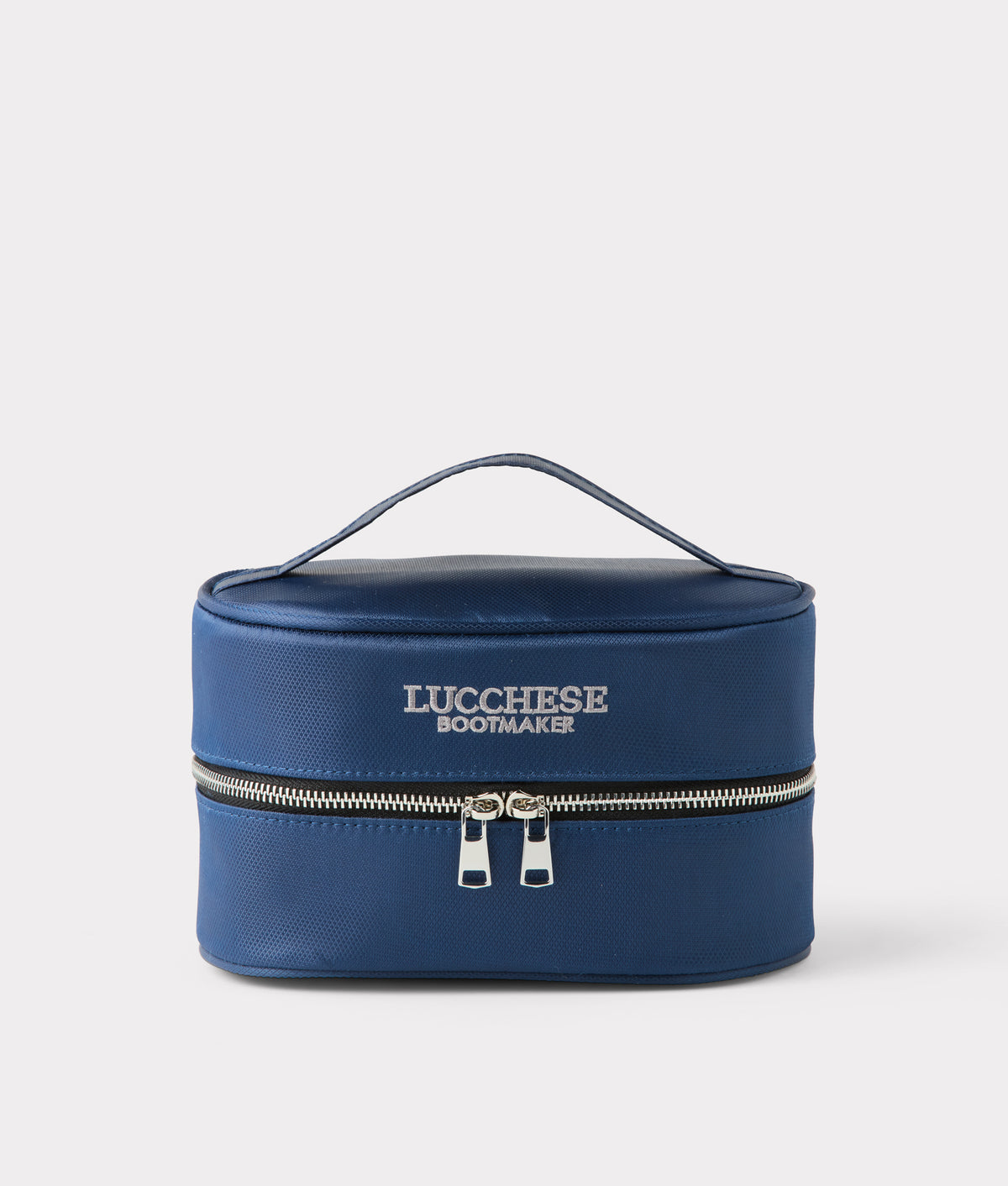
For buffalo and calf specifically, Lucchese says to condition every few months in thin coats, polish sparingly after conditioning, and skip conditioner on burnished leather. Their Leather Kit was $78 when we checked Nov 4, 2026; stand-alone Leather Conditioner was $16 and Premium Leather Protector $14 on lucchese.com.
How often, by leather type (Tecovas)
Tecovas’ how to clean leather boots guide is the most useful frequency chart we found from a Texas bootmaker. Brush lightly after every wear. Deeper clean, condition, and polish depend on the hide:
- Calfskin, bovine, oiled bovine — condition every 1–2 months.
- Goat and bison — only 3–4 times a year. These leathers already hold protective oils; over-conditioning can ruin the finish. Wipe residue with a damp cloth or horsehair brush.
- Ostrich — condition every 1–2 months.
- Alligator, crocodile, caiman, lizard — condition monthly.
- Python — monthly, with the grain of the scales; avoid polish if you can, and use cream polish only if you must.
- Shark — damp cloth and brush only; never polish.
- Suede — never condition.
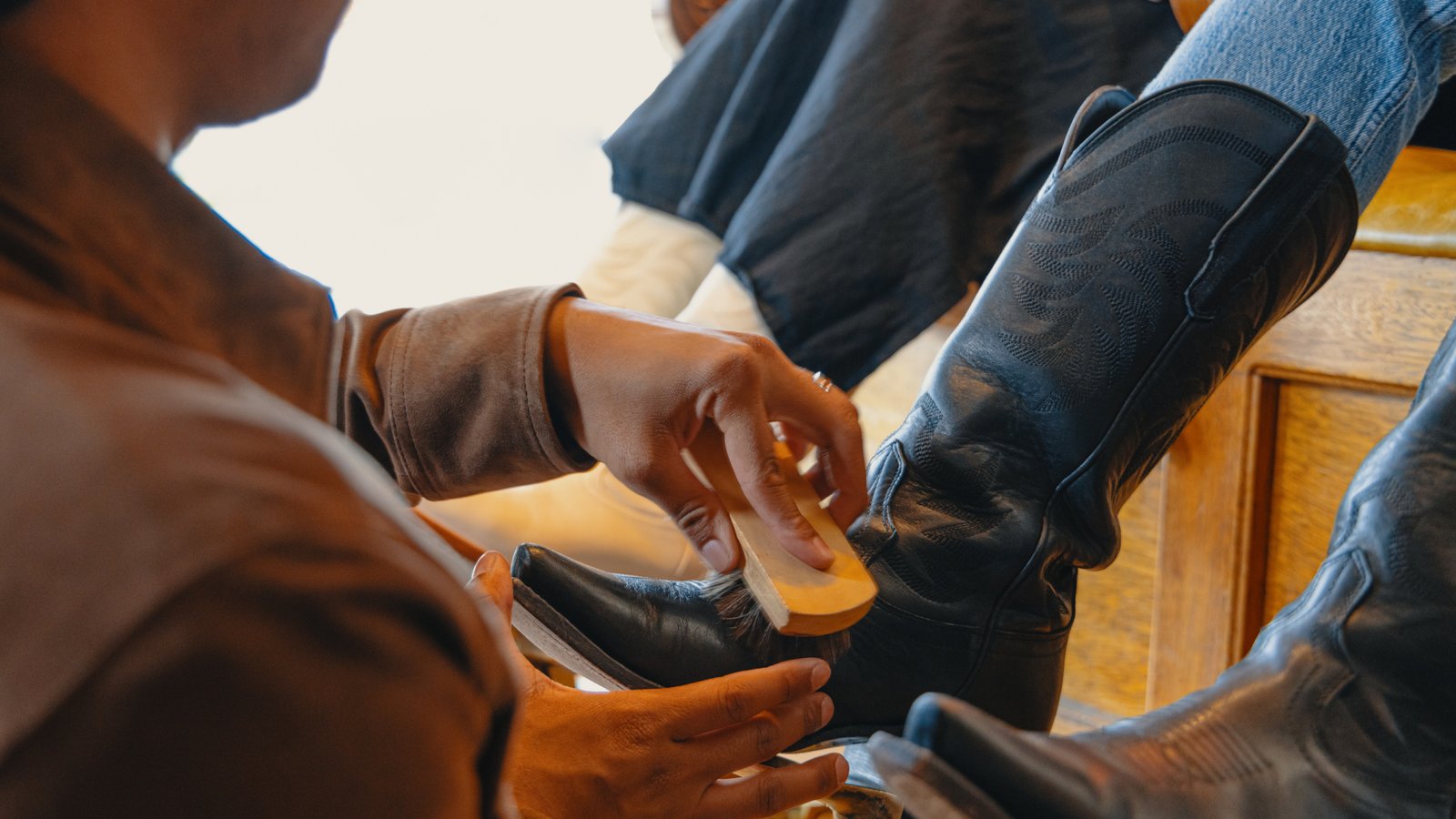
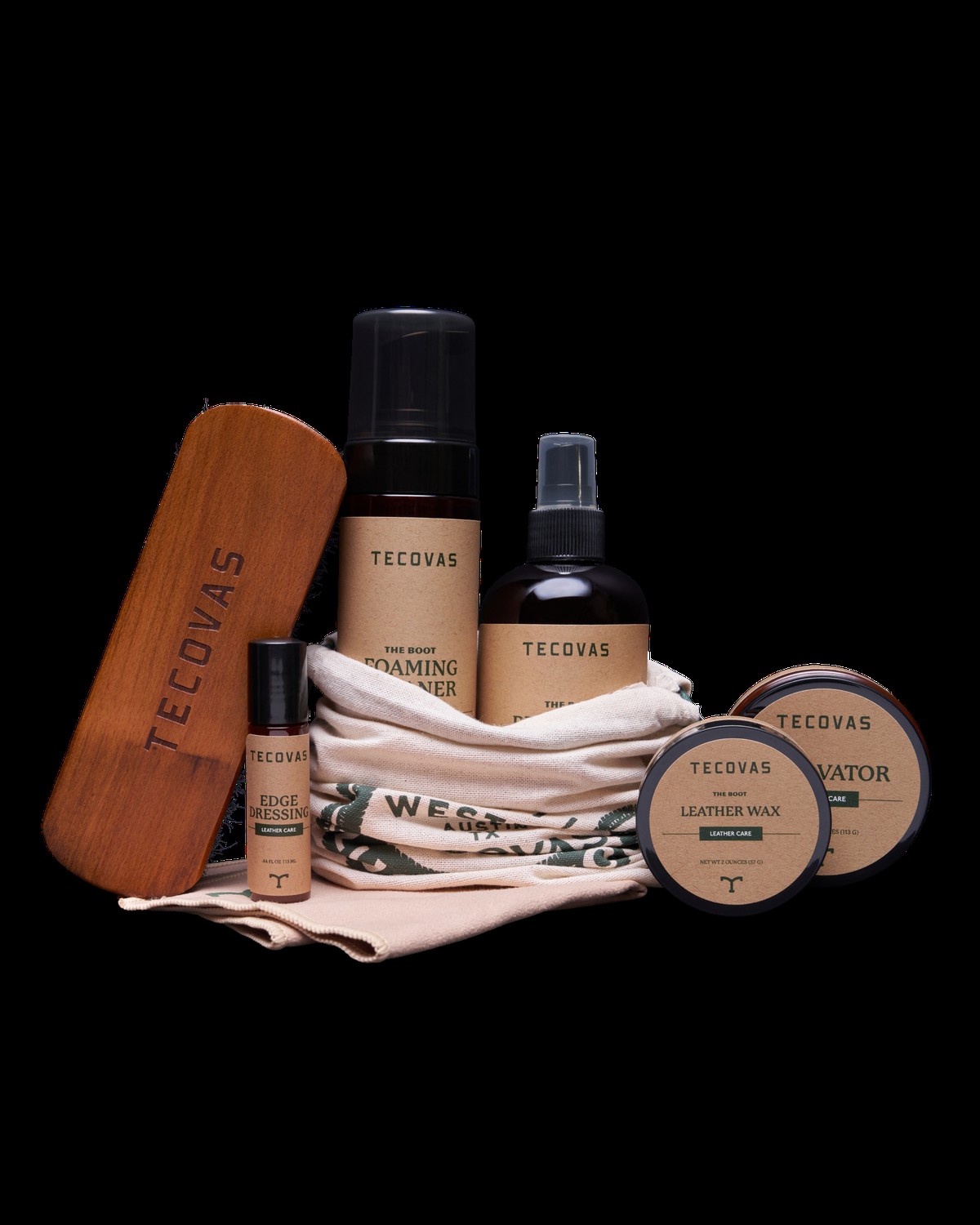
Their step-by-step for a deeper clean (on smooth leather) is: clear debris → foam cleaner on a cloth → renovator/conditioner in overlapping sections → edge dressing on the sole and heel while the conditioner sets → optional clear wax polish and a water-based protector. Tecovas notes the protector can darken some leathers, so test on a pull strap first. Their Basics Care Kit was $85 when we checked Nov 4, 2026; more detail by material lives on their product care page.
What never to do
- Never heat-dry wet boots or jackets — no heater, hairdryer, or direct sun. Both Lucchese and Tecovas point back to room-temperature air drying.
- Never polish or cream suede. Lucchese and Tecovas agree: protector and brush only.
- Never over-condition goat or bison. Tecovas says those hides already carry oils; conditioning more than a few times a year can wreck the finish.
- Never polish shark.
- Avoid polish on python when you can; if you polish, go cream-based and with the scales.
- Skip conditioner on burnished Lucchese leather, per their buffalo/calf guide.
- Don’t store leather in plastic. It traps moisture. Use breathable bags or leave boots on trees in a closet that gets air.
Dry Texas heat cracks leather you forget to condition. Heat-drying wet boots cracks them faster.
Jackets and trenches: the same logic, hung differently
A smooth leather trench or jacket follows the same clean → light condition → protect rhythm as a smooth boot. Wipe dust, condition thinly so the leather stays supple without going greasy, and hang it on a wide hanger so the shoulders don’t crease permanently. Give it air after a wear; don’t zip it into a plastic dry-cleaner bag for months. If the coat got rain-spotted, blot and air dry the same way you would a pair of boots.
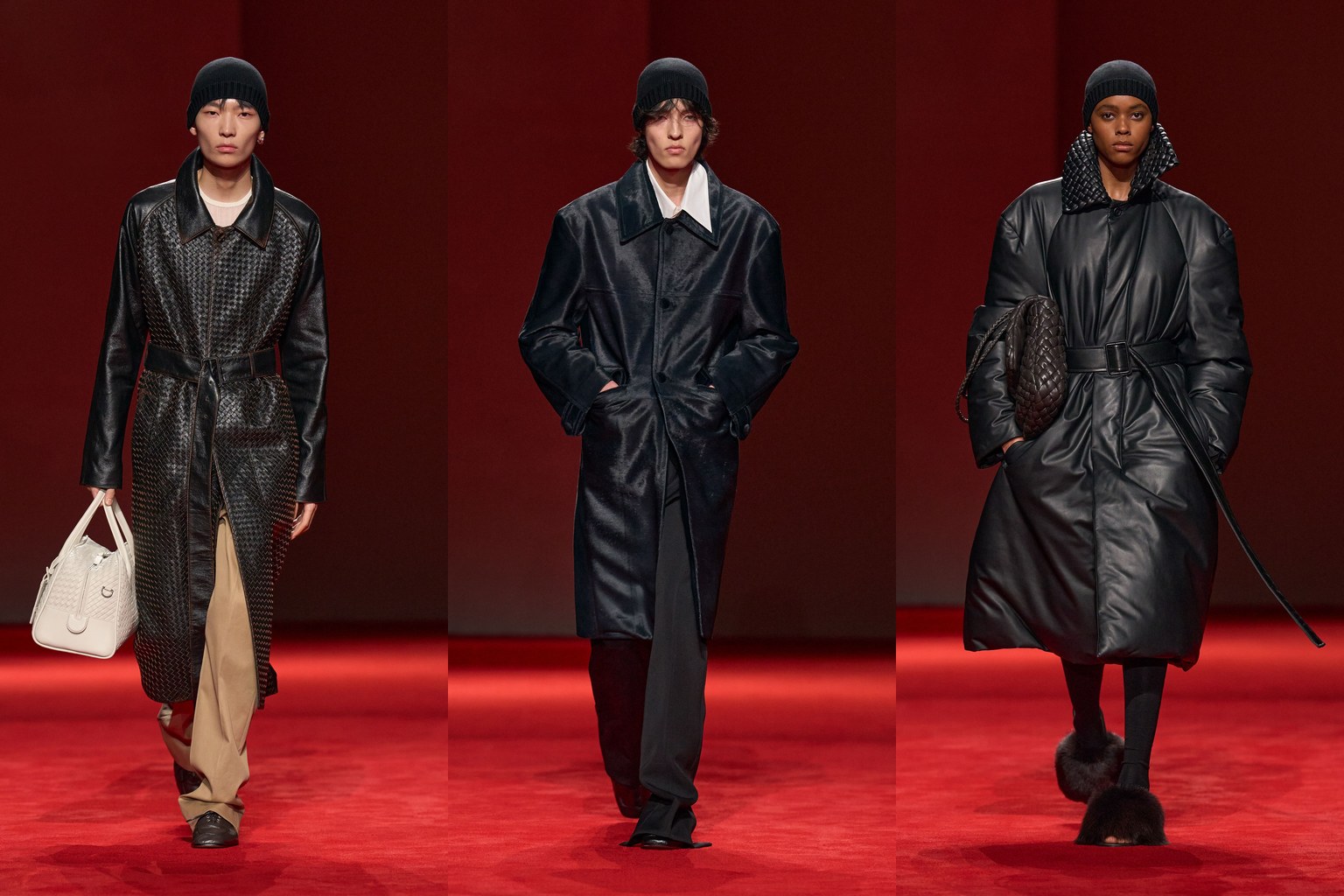
Texas coat weather is short, which is why the leather trench in our Bottega post only earns its keep if it lasts many winters. Light, regular care is what makes that math work — not a once-a-decade spa day.
Storage that actually helps
- Cedar boot trees after every wear — Lucchese calls this out for shape and odor; they also help wet boots dry from the inside.
- Cool, dry, out of sun — Lucchese’s buffalo/calf guide again.
- Breathable covers, not sealed plastic totes.
- Rotate pairs so the same shafts aren’t flexing every day without a rest.
Where this sits in Runway to Ranch
If you are still deciding which Texas boot to buy, start with Lucchese vs. Tecovas. If the leather piece you care about is a coat, go back to Bottega’s leather trench for Texas. For the rest of the series — McQueen, Chloé, Saint Laurent, shearling, Celine, Gucci — the hub is Runway to Ranch.
Care is not glamorous. It is how a $375 Tecovas or a $1,295 Lucchese (prices from our comparison post, when we checked) still looks intentional in 2036.